Teaching and Education
- Curriculum Design
- In-person Instruction
- Online Learning
From helping students explore digital design in the classroom to creating online curriculum that reaches learners wherever they are, I enjoy helping students bring complex concepts into practice.
Teaching has become a meaningful extension of my work as a designer. I bring real-world experience in UX, UI, strategy and creative direction into the classroom, giving students a supportive and playful environment to experiment, revise their ideas, and articulate their decisions to focus feedback. Whether I am teaching in-person or online, I aim to make complex digital concepts accessible and help students practice using thoughtful design to solve real-world problems.
Bringing Industry Practice into the Classroom
I was invited by Al Sanft, advisor to the director and associate professor of graphic design in The Design School, to teach Technology for Design 1 and 2 (GRA 321 and GRA 322) based on my experience working in technology and digital design.
The two required courses introduce third-year students to technologies spanning business systems, book design, motion and video design, website and app design, and basic coding. I created and taught the UX/UI portions of both courses—including the web and mobile projects, weekly lectures, and assignments.
For four years, I guided the same cohort through both courses over a full academic year—approximately 60–75 students annually and 240–300 students overall.
“Meryl is one of the best professors this program has had—she brought so much energy and positivity…she made me look forward to coming to class every day.”
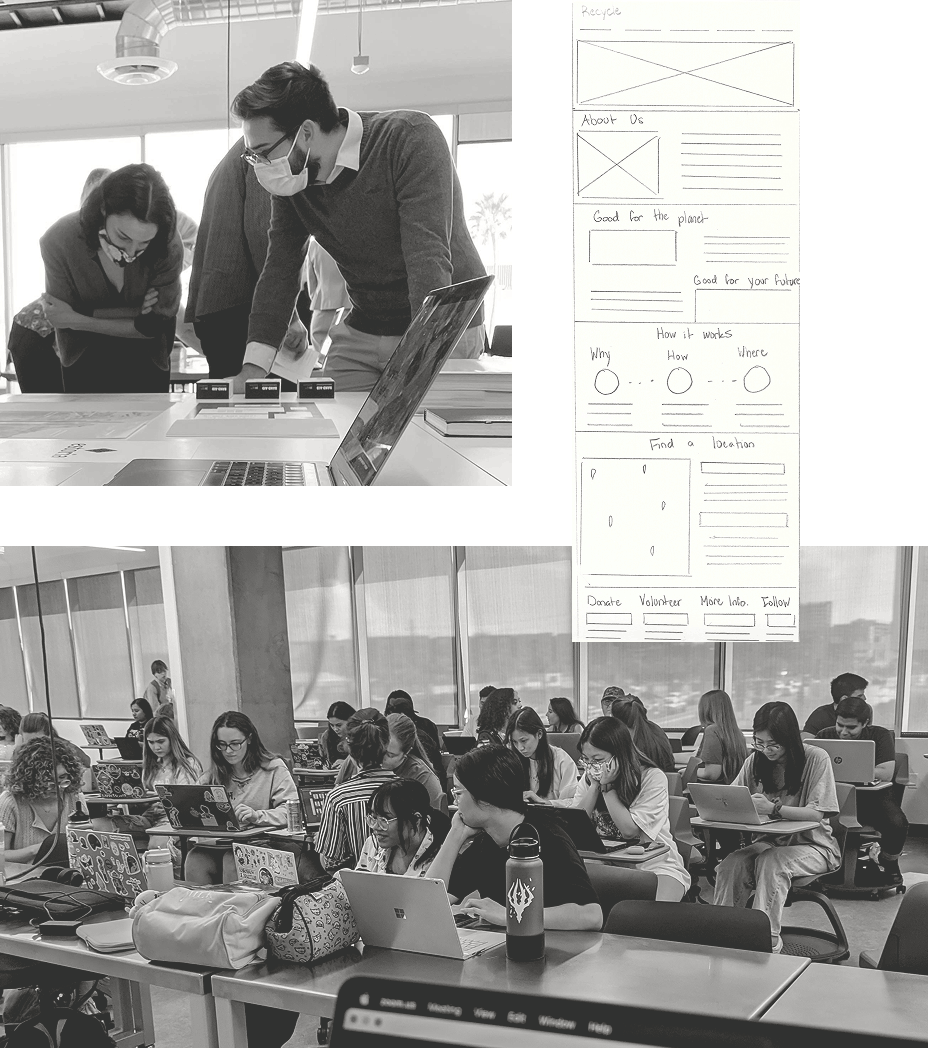
Learning Through Revision
I structured the curriculum around an iterative learning process. Students began with an initial solution and learned new design principles each week, which they then applied to revise and strengthen their work. This allowed them to see how research, feedback, and the deliberate application of digital design principles could transform an early idea into a clear and accessible solution tailored to its unique audience and goals.
Students chose their own topics within project guidelines, and I helped students clarify their audiences, strengthen their ideas and translate them into industry-standard deliverables, like creative briefs, wireframes, moodboards, design mockups, interactive prototypes ,and animations.
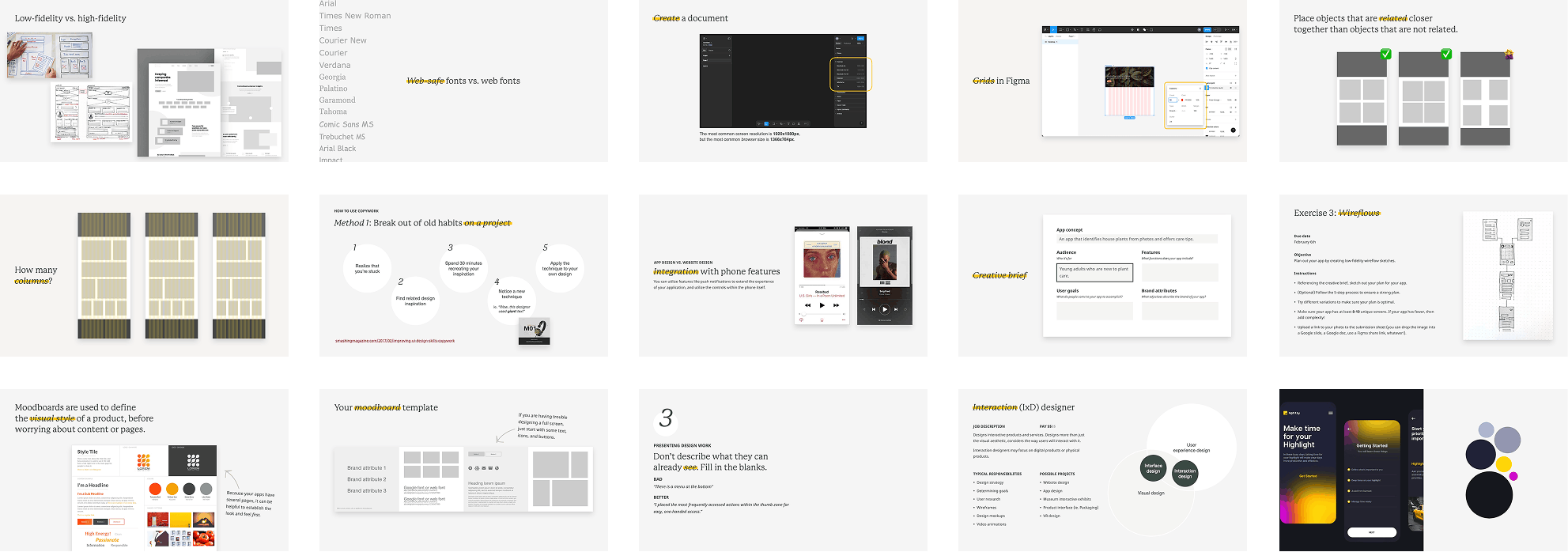
GRA 321 established a foundation in design research, wireframes, layout, web typography, accessibility, responsive design, and prototyping. GRA 322 built upon that foundation through multi-page design systems, audience strategy, advanced UI design, app design, mobile-first thinking, animation, and designing for social good.
Critiques were structured to resemble the experience of working with a creative director. I provided individual and group feedback while teaching students to articulate their reasoning and ask focused questions that led to strategic revisions. Students also practiced presenting under strict time limits and giving useful feedback during peer critiques.
“Meryl was an amazing instructor and presented the material in an understandable and exciting way… I always walked away with my question answered and confidence in the direction I was going.”
“You have been such a supportive force as we all learned digital design, which for me was a very foreign area that I have really grown to love.”
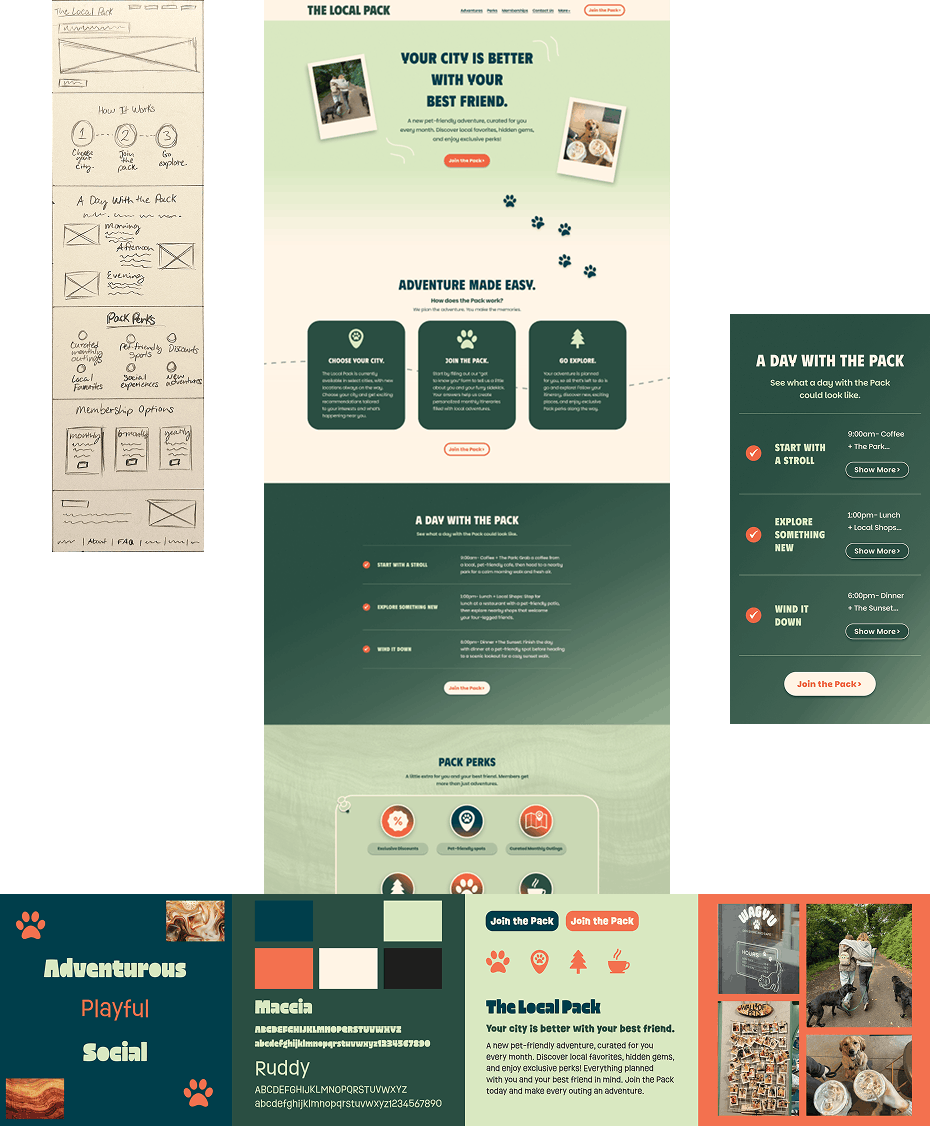
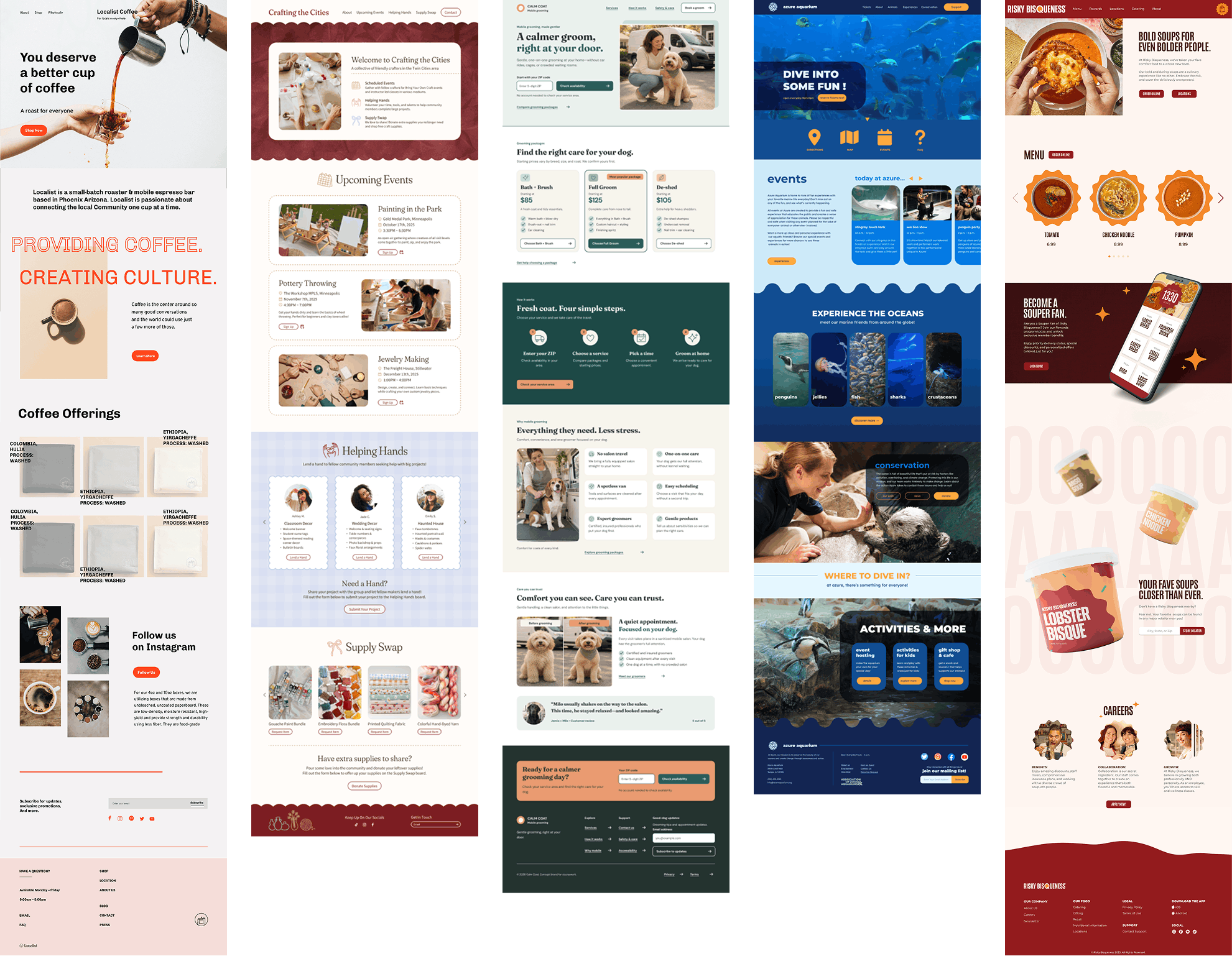
Expanding the Course Online
After my first year of teaching, The Design School invited me to convert the web and mobile curriculum into an accelerated online version of GRA 321, making the material available to a much larger audience of remote students.
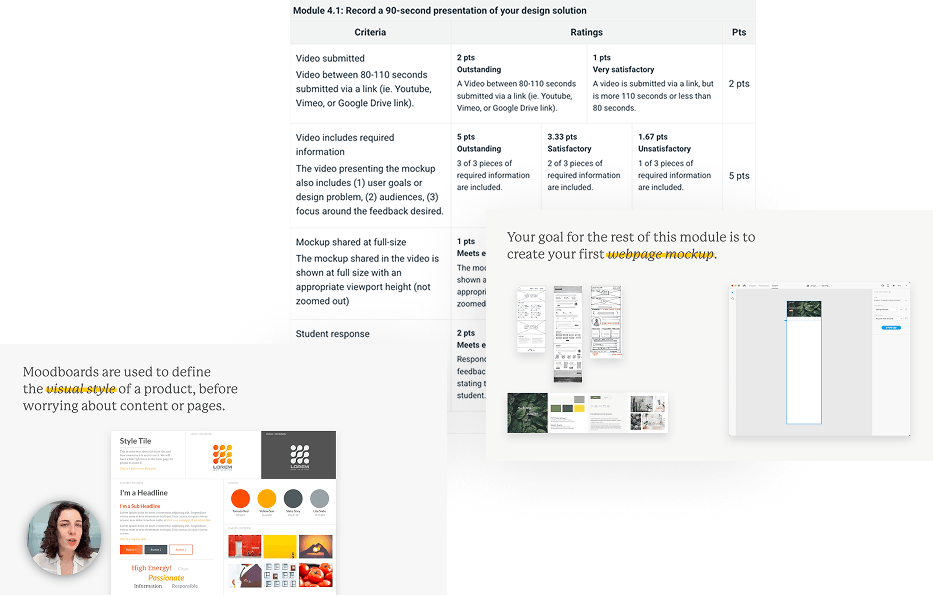
I redesigned the content for a 7.5-week online format centered around an interative webpage design project. Students progress through five modules covering website and mobile design, with each assignment prompting them to apply new principles and revise their work.
I designed and produced five online modules comprising approximately 20–25 video lectures and demonstrations, along with project assignments, grading rubrics, timelines, and supporting materials. I continue to teach sections of the course, which serves approximately 40–60 students each spring, summer and fall with multiple instructors supporting smaller groups.
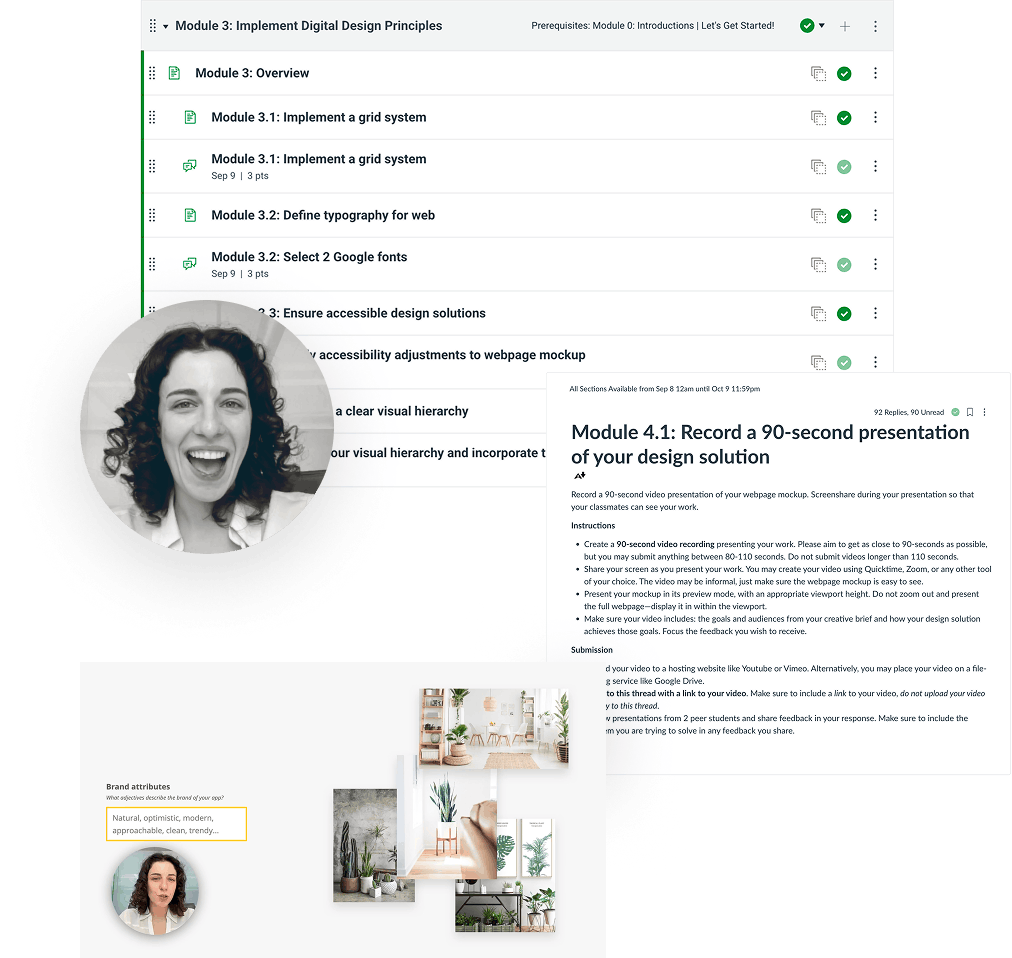
The online course has led to two student-presented ASU Professor of Impact Awards. Students specifically recognized the structure and presentation of the course and the ability of the recorded lessons to make an asynchronous experience feel engaging and personal.
“Thank you for the most well-presented and laid-out class I have had at ASU. This has been a great experience!”
“I’ve learned so much about web design through just this one seven-week class… I always felt connected and engaged while watching your lessons—it felt like we were on a video call.”
Guest Lectures, Workshops, & Training
Beyond the Technology for Design course, I have created and presented recurring guest lectures for students at different stages of ASU’s design program. For sophomores, I’ve presented an Introduction to UX and UI Design lecture that provides a foundation for later coursework, as well as a session on careers in digital design covering common roles, day-to-day responsibilities, portfolio preparation, and interview questions. For seniors, I presented a lecture Storytelling with Data, using real-world examples to reinforce how data can be communicated accurately, clearly, and compellingly as students develop year-long thesis projects focused on social issues.


Outside the university classroom, I have created and led learning experiences for colleagues, clients, and the broader design community. These have included a hands-on Sketch workshop for DC Design Week, internal presentations on UX and data visualization, and a pilot Slack-based training program for the Pew Charitable Trusts that delivered short daily exercises on personas, wireframing, voice, and tone. Across these settings, I focus on making complex design concepts approachable, practical, and useful.
